Feeding Therapy
Mealtime should bring your family together — not tear it apart.
Feeding concerns can make meals stressful. An evaluation can consider feeding skills, sensory responses, relevant medical and nutritional history, and caregiver concerns before recommendations are made.
For: Infants through school-age children
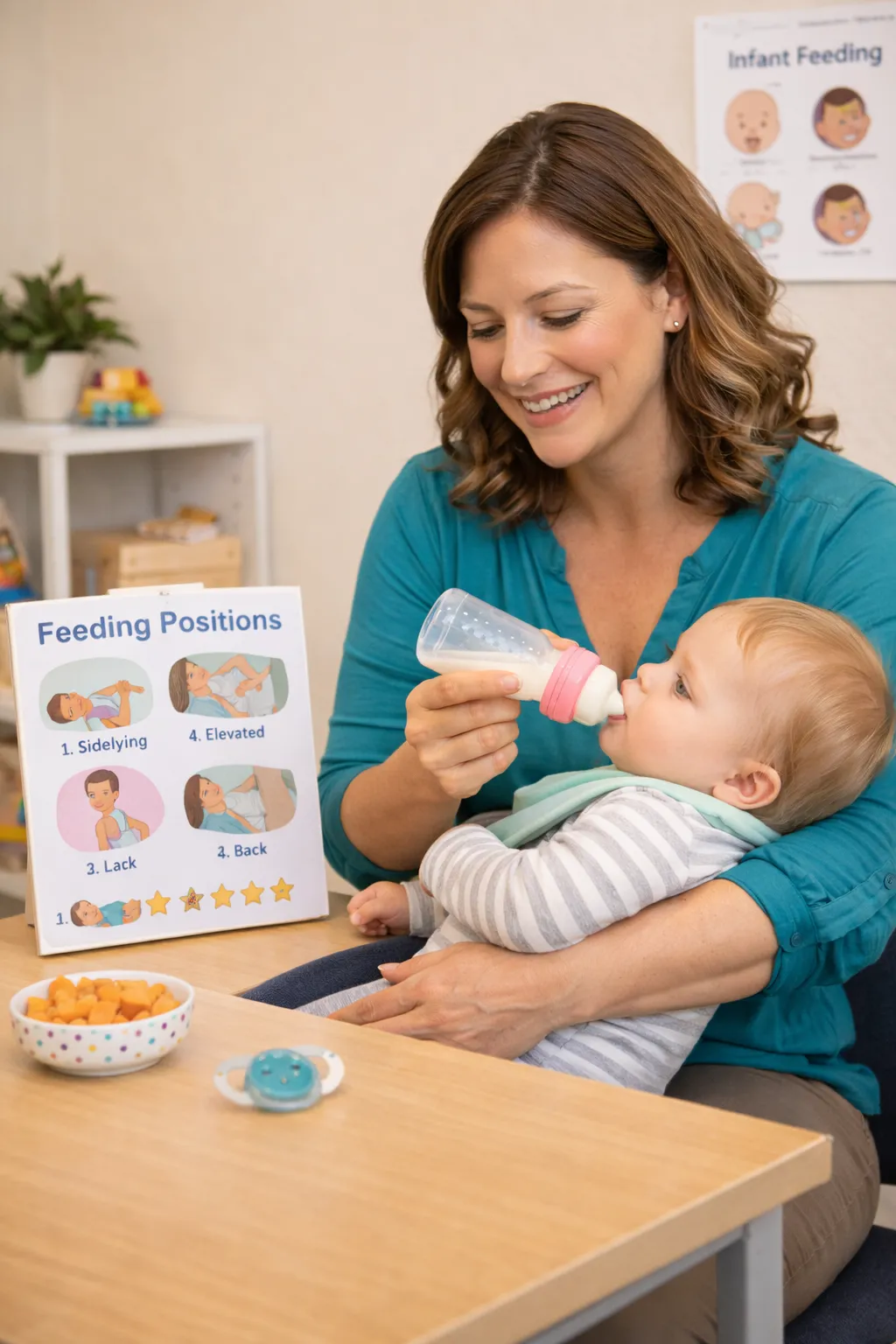
Feeding challenges affect more than nutrition. They can increase family stress, limit participation in social routines, and make eating feel unsafe or unpredictable for a child. Early support can identify whether the main issue is sensory tolerance, oral motor skill, swallowing safety, medical history, nutrition, anxiety, or a mix of factors.
We use responsive, evidence-informed approaches that respect your child's pace. We do not force-feed. We focus on safety, skill-building, caregiver coaching, and positive learning around food.
A feeding evaluation may consider medical and nutritional history, feeding skills, sensory responses, routines, and caregiver priorities. Referrals to medical, nutrition, occupational therapy, or other professionals may be appropriate.
Signs your child may need feeding therapy
- Eats fewer than 20 different foods
- Gags, coughs, or vomits with certain textures
- Mealtimes consistently last longer than 30 minutes
- Has lost weight or fallen off their growth curve
- Refuses entire food groups
- Shows extreme anxiety or tantrums around food
- Only eats foods of certain colors or brands
- Relies on pouches or purees past the expected age
Gentle, skill-building methods
Individual treatment planning
The clinician selects an approach after evaluating safety, skills, sensory responses, routines, and family priorities.
Sensory-informed care
We address the sensory sensitivities that often hide underneath “picky eating.”
Oral motor therapy
Building the strength and coordination for safe, confident chewing and swallowing.
Caregiver guidance
Caregiver education or home strategies may be recommended when appropriate for the treatment plan.
Specialized programs
Dig deeper into the specific challenge your family is facing.
Clinical information source
This page provides general education and does not diagnose a patient. For professional guidance on this topic, see ASHA Practice Portal: Pediatric Feeding and Swallowing ↗. Website content updated August 12, 2026.
Clinic options
Find care near Kansas City
BSPS has physical clinics in Lee's Summit, Missouri, and Overland Park, Kansas. Confirm current service availability when you contact the practice.
Related services
Wondering if feeding therapy is right for your family?
Contact BSPS to discuss whether an evaluation may be appropriate. Recommendations, documentation, timing, and treatment needs depend on individual findings.
- Two physical clinic locations
- Insurance varies by plan
- Treatment recommendations depend on individual needs