Tethered Oral Tissues
Understand whether tongue-tie is affecting function.
Tongue-tie and lip-tie can restrict movement, but not every restriction causes a functional problem or needs a release. We evaluate feeding, speech, oral movement, posture, and symptoms so families can make informed decisions with the right providers.
For: Infants through adults
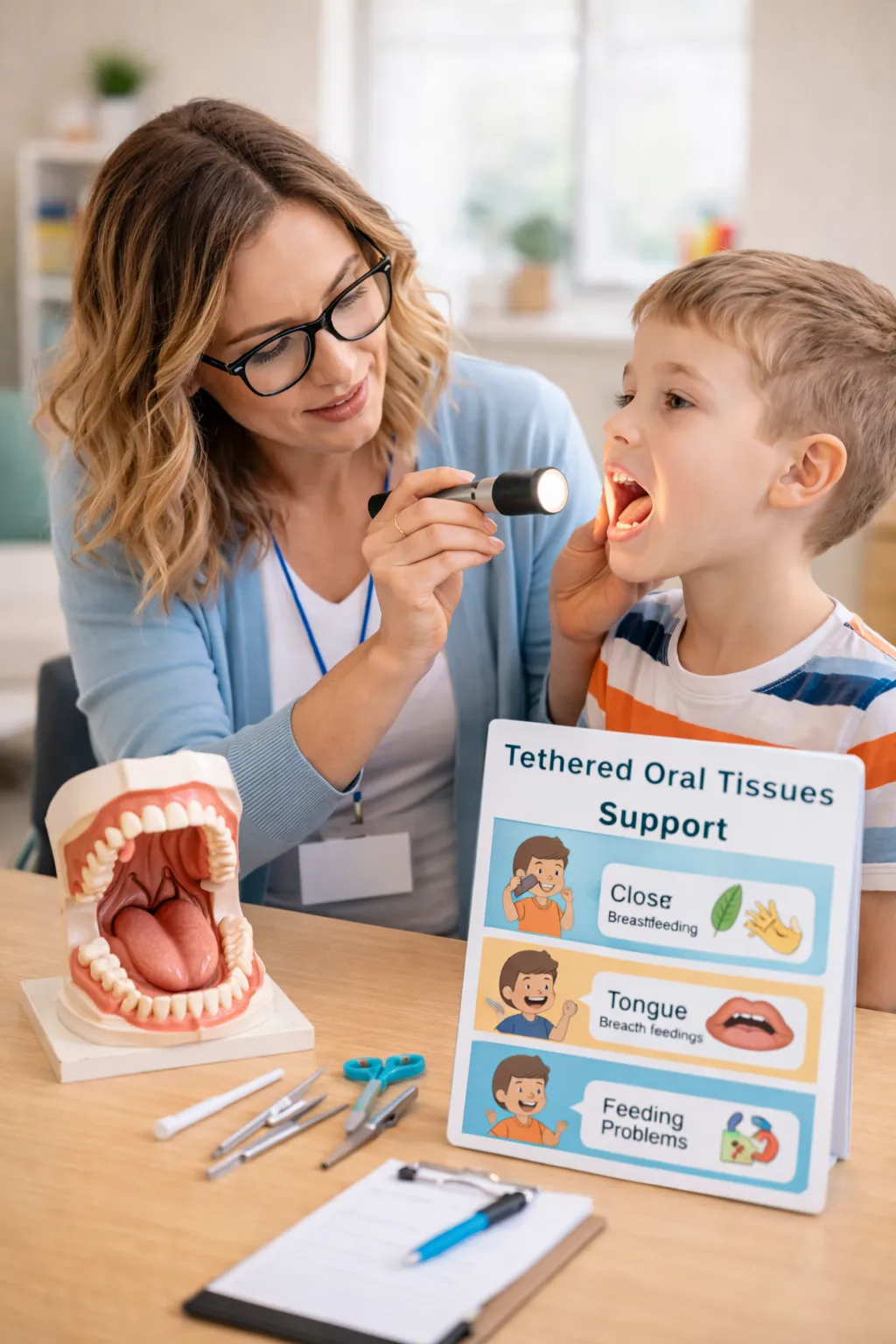
A frenectomy changes tissue restriction, but it does not automatically teach new movement patterns. When a qualified release provider recommends surgery, therapy may help prepare range of motion, build awareness, support feeding or speech goals, and reinforce new function after the procedure.
Before a release, we may work on tongue awareness, functional movement, feeding strategies, and baseline exercises. After a release, we follow the release provider's instructions, support wound-care routines when delegated, and build strength, coordination, and carryover.
The right plan depends on age, symptoms, feeding or speech concerns, oral function, and the release provider's protocol. We work with Kansas City-area dentists, ENTs, pediatricians, lactation professionals, and other providers to coordinate care.
Signs of tethered oral tissues
- Infants: difficulty latching, clicking sounds, poor weight gain, painful nursing
- Limited tongue movement — can't reach the roof of the mouth
- Speech sound concerns when tongue movement appears functionally limited
- Messy eating or difficulty with certain foods
- Gap between front teeth
- Tongue thrust or other myofunctional patterns
- TMJ pain or tension
Function-focused care around a release
Functional evaluation
We look beyond appearance to feeding, speech, oral movement, posture, and symptoms.
Pre-release support
When surgery is recommended, we build tongue awareness, movement patterns, and feeding or speech strategies before the procedure.
Post-release therapy
After a release, we follow provider instructions and work on range of motion, strength, coordination, and functional carryover.
Provider coordination
Communication with an ENT, dentist, surgeon, or other provider may occur when clinically appropriate and authorized.
Clinical information source
This page provides general education and does not diagnose a patient. For professional guidance on this topic, see ASHA Practice Portal: Orofacial Myofunctional Disorders ↗. Website content updated August 12, 2026.
Clinic options
Find care near Kansas City
BSPS has physical clinics in Lee's Summit, Missouri, and Overland Park, Kansas. Confirm current service availability when you contact the practice.
Related services
Wondering if tethered oral tissues is right for your family?
Contact BSPS to discuss whether an evaluation may be appropriate. Recommendations, documentation, timing, and treatment needs depend on individual findings.
- Two physical clinic locations
- Insurance varies by plan
- Treatment recommendations depend on individual needs